Lesson 5 of 158 min read
Water and wastewater: the rules that decide if you’re legal
Where bin cleaning wash water can legally go, what cities require, the fines for storm drains, and how to line up water and a dump site before you buy a rig.
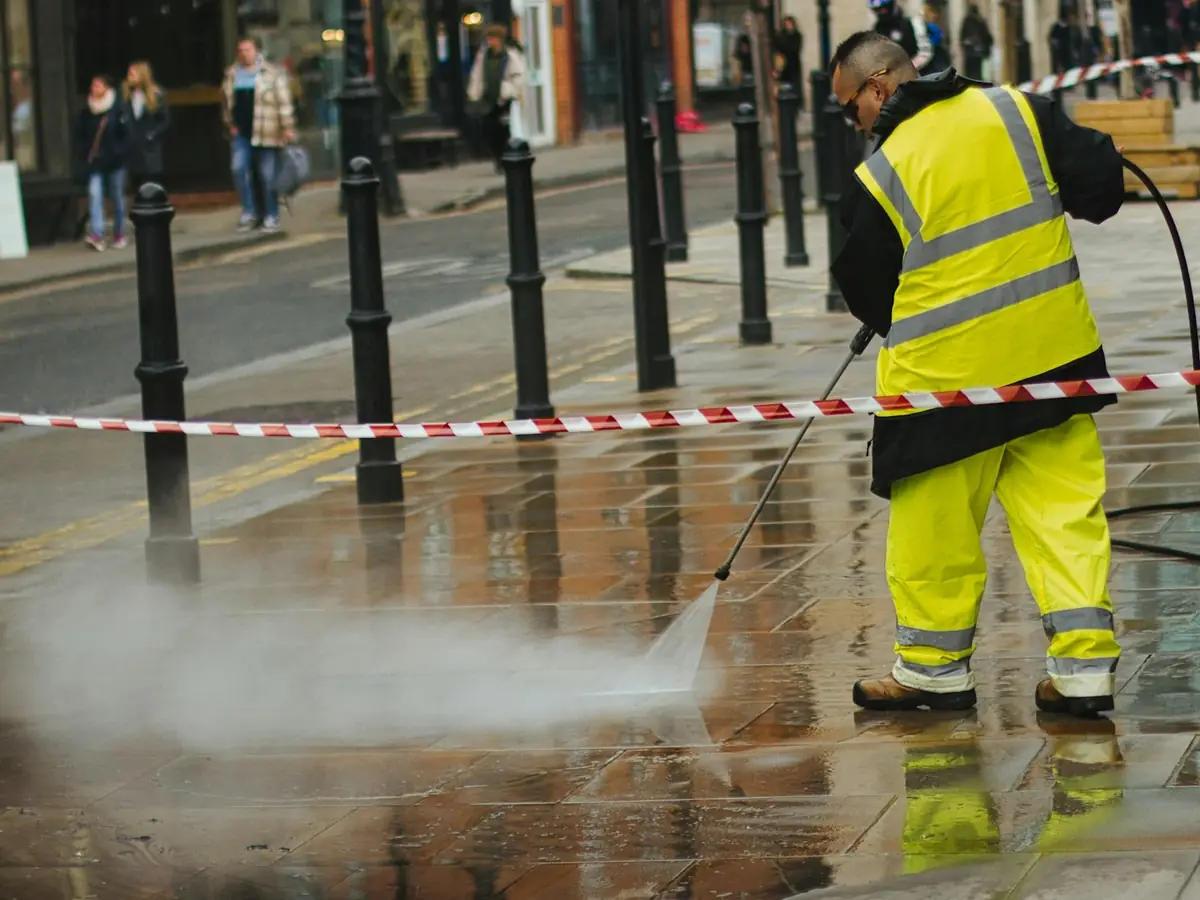
The water that comes out of a trash cart carries garbage, food waste, grease and whatever leaked from the bags. It can never run down the gutter to a storm drain. That one rule decides whether you’re in business legally, and it’s the first thing to sort out, before you buy a rig.
The rules are local, so this lesson shows you how they work, what real cities require, and the questions to ask yours. It’s general information, not legal advice.
Why the rule exists
Storm drains aren’t sewers. The water in them goes straight to creeks, rivers and the ocean without treatment. Cities run their storm drain systems under federal Clean Water Act permits, and those permits require them to ban, by local ordinance, anything going into a storm drain that isn’t rain (40 CFR 122.34). That’s why nearly every city has a rule against wash water reaching the street.
The federal list of discharges a city may allow includes a homeowner washing their own car. Commercial washing isn’t on it. A business cleaning carts all day is treated differently from a resident with a hose.
Where the water comes from and where it goes
Where the water comes from, and where it can go
- Fill up
- Your own tap, with a backflow preventer
- A bulk water station (about $5 to $15 per 1,000 gallons)
- A hydrant permit that allows truck tanks, where one exists
- Wash and capture
- Every drop from inside the cart lands in the wash chamber
- Wash the outside over the chamber or a catch mat
- Dirty water is pumped to the wastewater tank
- Dump it legally
- The sanitary sewer, with the utility’s written OK
- A receiving station that takes gray water
- A car wash, under a written agreement you carry
- Storm drain
- Gutter or street
- Lawn or landscaping
- A manhole
- Left to evaporate
Rules are set by your city and sewer utility, so get your disposal answer in writing before you buy a rig.
What a compliant bin cleaner does
- Captures all of the wash water in the truck or trailer, including the rinse from the outside of the cart. Don’t let it run down the gutter and don’t leave it to evaporate: Tulsa and Sacramento both ban evaporation.
- Keeps it off lawns and landscaping. Some pressure washers can send clean rinse water to landscaping. Cart water carries garbage and food waste, which rules that out. Sacramento bans putting water with “garbage, food wastes, or trash” on land.
- Dumps it only where the sewer utility allows, with written permission or a permit (the options are below).
- Meets the sewer’s limits. Typical conditions: pH inside the utility’s range (5 to 12 in some cities, 6 to 9 in others), water no hotter than 140°F to 150°F, solids screened out, grease removed, and no bleach, strong acids or caustics that could make it hazardous.
- Keeps records: the permit or written OK, dumping receipts, and photos of the capture setup. HOAs, property managers and inspectors ask for them.
Real rules from real places
| Place | What the rule says | Permit or fee | Fine |
|---|---|---|---|
| Portland, OR | A mobile washer discharge authorization is required, and it names “trash receptacle cleaning services.” Work plans for each property | Authorization | Civil penalties |
| Fort Worth, TX | Permit for mobile cleaning; every rig registered; sewer only with the owner’s OK, at 150°F or cooler | $25 per business plus $25 per rig | Up to $2,000 a day |
| Austin, TX | Sewer discharge only at a permitted fixed site with an interceptor; no dumping into cleanouts or toilets elsewhere | Discharge permit | Up to $2,000 a day |
| Grand Prairie, TX | Everything to the sanitary sewer through a grit trap, or to a car wash under a written agreement you carry | Citations | |
| San Diego, CA | Collect it; dispose to a sink, toilet or cleanout with the owner’s permission | Up to $10,000 a day | |
| Sacramento County, CA | Sewer discharge needs a mobile washer permit; using a customer’s cleanout needs their permission | Permit | Up to $5,000 a day |
| Sonoma County, CA | To the sanitary sewer; ask the treatment plant about a discharge permit | Possibly a permit | Up to $25,000 a day |
| Tulsa, OK | If you use chemicals or heated water, capture all of it; no evaporating | Fine, jail or both | |
| Columbia, SC | Capture it; sewer disposal needs approval plus the owner’s OK; cool it, neutralize it, limit grease | Approval | Fines |
| Ohio (state EPA) | Treated as industrial wastewater; get the sewer plant’s permission first, or haul it to one | Fines |
Sources: Portland, Fort Worth, Austin, Grand Prairie, San Diego, Sacramento County, Sonoma County, Tulsa, Columbia, Ohio EPA.
The federal ceiling is far higher: up to $68,445 a day per violation under the Clean Water Act (40 CFR 19.4). And a property owner can be fined for a contractor’s illegal discharge, which is exactly why HOAs and restaurants ask where your water goes.
Where you can dump
| Option | How it works | What it costs |
|---|---|---|
| The sanitary sewer, with permission | Your sewer utility’s permit or written OK, at your shop or the customer’s site | Varies; often free or a small permit |
| A receiving station | A city station that takes septage or gray water, with prior approval | Santa Maria, CA 13.4¢ a gallon; King County, WA 17.5¢ a gallon plus $200 a year a truck |
| A car wash | Under a written agreement you keep in the truck | Negotiated |
| A licensed liquid-waste hauler | For anything hazardous | Quoted |
Sources: Santa Maria, King County.
Some builders simply suggest RV dump stations. Others say to get permission first and keep records, which is the right answer: an RV dump is built for RV waste, and its owner and the sewer utility decide whether your cart water is welcome. Never open a manhole, and never use a home toilet or cleanout unless your utility allows it. Austin, for one, bans it.
Tip: Santa Maria bills on the size of your tank, not what’s in it, so dump full tanks. Using less water per bin cuts your dumping bill as much as your water bill.
Where to get water
Water itself is cheap. Getting it into a tank legally takes a little planning.
- Your own tap. Protect the house’s water from backflow: utilities require an air gap or a backflow device when filling tanks. Austin requires a 6-inch air gap. Check your home-business zoning and HOA rules too (Lesson 4).
- A bulk water station. Prior Lake, Minnesota sells water at $5 per 1,000 gallons on a prepaid card, around the clock (Prior Lake). Frederick Water in Virginia charges $14.52 (Frederick Water).
- A hydrant permit, where one fits a mobile business. Most hydrant meter programs are built for construction crews on one hydrant:
| Utility | Deposit and fees | Works for a mobile bin cleaner? |
|---|---|---|
| San Antonio (SAWS) | $1,945 deposit, $7 a day, about $7 per 1,000 gallons | A contract with monthly reads |
| Tampa | $700 deposit, $1.84 a day | No: meters may not be mounted on a truck |
| Durham, NC | $500 deposit, $150 a month | No: no vehicle-mounted or portable meters |
| Portland, OR | $4,380 a year for two vehicle tags, including about 374,000 gallons | Yes: built for truck and trailer tanks |
Sources: SAWS, Tampa, Durham, Portland.
Never take water from a hydrant without a permit. Frederick Water fines unauthorized hydrant use $5,000.
What water and dumping cost per bin
At 1 to 3 gallons a bin:
- Water: about 0.15 cents to 4 cents a bin.
- Dumping at a receiving station: about 13 to 52 cents a bin.
Example: 60 bins at 3 gallons each makes about 180 gallons of dirty water, roughly $24 to $31 a day to dump at those stations’ rates. Our arithmetic. Water is nearly free; disposal, deposits and permits are what cost money.
Dumpster pads and grease
Commercial pads put far more dirty water on the ground than a cart does, and it’s greasy. Grease is the most common cause of sewer blockages, 47% of them in EPA’s count (EPA). Counties tell restaurants never to hose down a dumpster area themselves, which is why they hire someone who can do it right.
On a pad job:
- Sweep up debris and soak up grease with absorbent first.
- Block the nearby storm drain inlets.
- Vacuum up all the water.
- Run oily water through a separator or grease interceptor where your utility requires it.
- Dump only where the sewer agency has approved it.
Approval can take time. One guide says up to 60 days. Call your sewer utility before you quote your first pad (Lesson 13).
What to ask your city
Call or write to two offices: the stormwater program (often in public works or environmental services) and the sewer utility’s pretreatment or industrial waste program. Ask, in writing:
- Where may I legally dispose of wash water from cleaning residential trash carts? From dumpsters and dumpster pads?
- Do I need a mobile washer permit, a discharge authorization or a registration for each rig?
- Can I use your receiving station, and what does it cost?
- What limits apply: temperature, pH, grease, solids, chemicals?
- Can I fill tanks from a hydrant or a bulk station, and how?
Ask the same in every city on your planned route. If there’s no legal place to dump nearby, nothing else in this course matters yet.
Turn it into a selling point
Most residents have no idea where wash water goes, but HOA boards, property managers and restaurants do. “We capture every drop of wash water and take it to an approved treatment site” is specific and provable. “Eco-friendly” on its own is the kind of vague claim the FTC’s Green Guides call deceptive (16 CFR 260.4), and 23 of the 110 bin cleaners whose ads we captured used it.
Key takeaways
- Wash water from carts can never reach a storm drain, gutter, lawn or manhole. Capture all of it, including the outside rinse.
- Dump only into the sanitary sewer with your utility’s written OK, at an approved receiving station, or at a car wash under a written agreement.
- Local fines run up to $10,000 or $25,000 a day, and the property owner can be fined too.
- Water costs pennies a bin; dumping costs about 13 to 52 cents a bin at receiving stations. Less water per bin cuts both.
- Get written answers from your stormwater and sewer offices before you buy a rig.
FAQ
Can I dump bin cleaning water on the ground or a lawn?
No. Cart wash water carries garbage, food waste and grease, so it can’t go on the ground, a lawn or landscaping, even where some clean rinse water might be allowed. Sacramento, for example, bans putting water containing garbage or food waste on land. Capture it and take it to an approved sewer connection or station.
Can I dump bin wash water at an RV dump station?
Only with permission. Some equipment builders suggest RV dumps, but the station’s owner and the local sewer utility decide what they accept. Ask first, get the answer in writing, and keep your receipts.
Do I need a permit for bin cleaning wastewater?
In some cities, yes. Portland requires a mobile washer discharge authorization that names trash receptacle cleaning, Fort Worth requires a permit and a registration for each rig, and Sacramento requires a mobile washer permit to use the sewer. Other places only need the sewer utility’s written OK. Ask your stormwater office and your sewer utility.
What happens if wash water gets into a storm drain?
You can be fined, and so can the property owner. Local penalties we found run up to $2,000 a day in Austin and Fort Worth, $5,000 in Sacramento County, $10,000 in San Diego and $25,000 in Sonoma County. The federal Clean Water Act allows up to $68,445 a day.
How do I find out the rules in my city?
Contact your city’s stormwater program and your sewer utility’s pretreatment or industrial waste program. Ask where you may dispose of wash water from trash carts and from dumpster pads, whether you need a permit, and what limits apply. Get the answers in writing.