Lesson 1 of 158 min read
Is a bin cleaning business worth starting?
What a trash bin cleaning business really is, who pays for it, where it works, what it earns and what goes wrong, with real numbers from 411 companies.
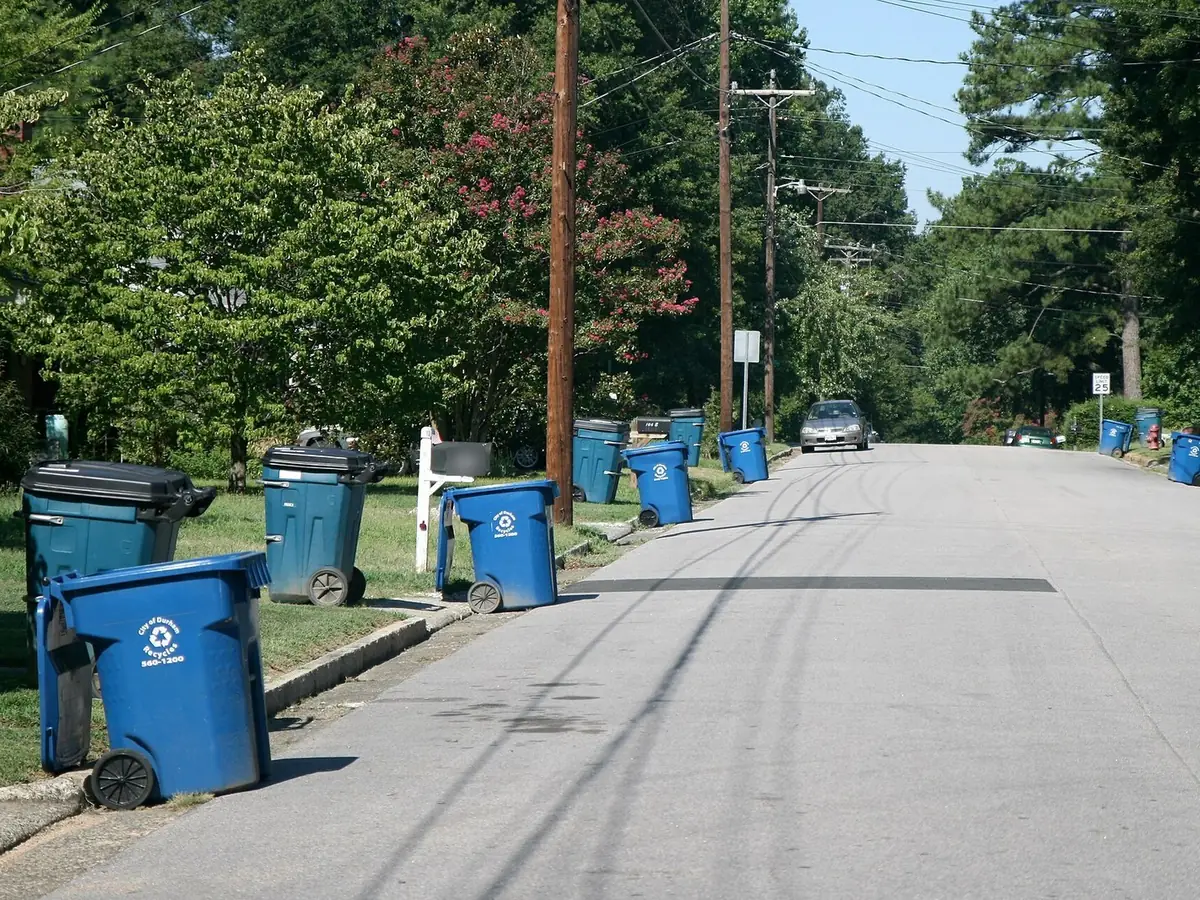
A bin cleaning business washes the trash carts people keep at the curb. You show up after the garbage truck empties them, clean them inside and out, take the dirty water with you, and come back every few weeks. Customers pay by card, usually on a plan.
That’s the whole business. It’s simple, it’s dirty, and it can pay well. It can also lose money fast if you buy the wrong rig, spread out too far or skip the wastewater rules. This lesson gives you the honest picture before you spend anything.
What the work actually is
Most bin cleaners do residential carts first: the 64- and 96-gallon wheeled carts cities and haulers hand out for trash, recycling and yard waste. The cart can only be cleaned when it’s empty, so your schedule follows the garbage truck. You clean on trash day after pickup, or the next day where carts can stay out.
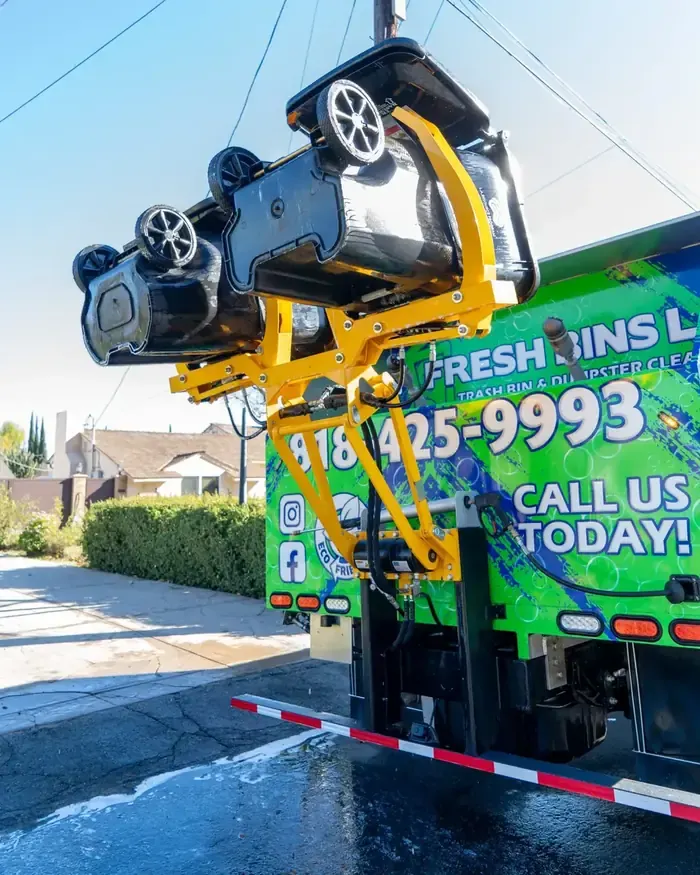
At each stop you tip the cart upside down over a wash chamber, blast the inside with a spinning hot-water head, wash the outside, deodorize it and put it back. On a purpose-built rig that takes two to five minutes a stop. The dirty water goes into a tank on your truck or trailer, and you dump it where your sewer utility allows.
Customers pick a plan: every 4 weeks, every other month, quarterly, or a one-time clean. Many companies also clean commercial dumpsters and the concrete pads they sit on, which pays more per job but needs different equipment and permits.
Why people pay for it
Automated carts hold the mess. Cities switched to big wheeled carts that a truck tips by itself. Houston, for example, gives single-family homes a 96-gallon cart, collected once a week (City of Houston). Whatever sticks to the bottom stays there, week after week.
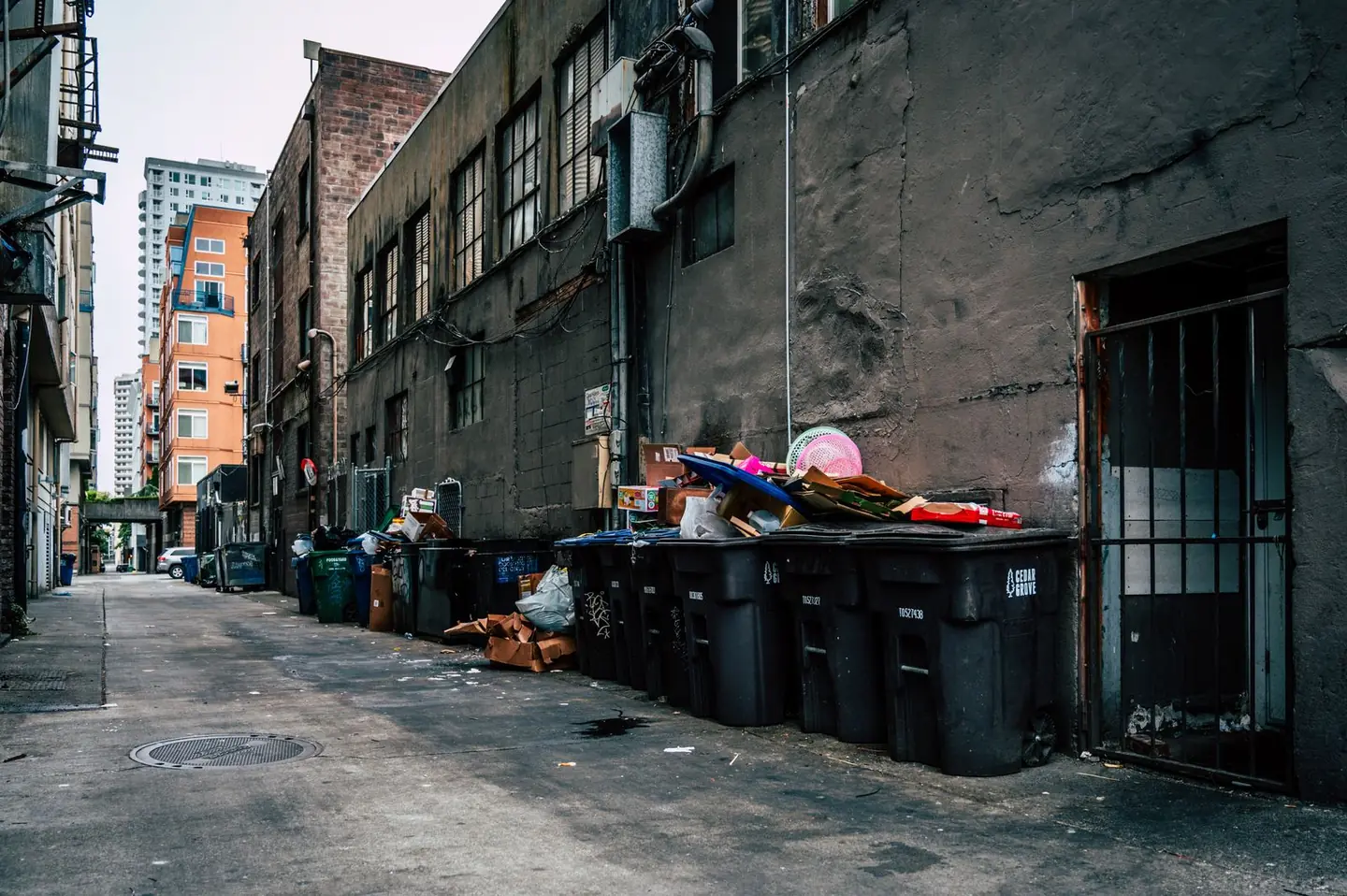
Heat breeds flies. In warm weather, fly eggs laid in that residue hatch in under a day, and a new generation of flies can be out in about a week (University of Missouri Extension, Orange County Vector Control). That’s why the ads in this industry are about smell and maggots: 28 of the 29 bin cleaners running Facebook and Instagram ads in October 2026 led with smell, bugs or germs (BinClean Marketing’s industry report).
Why carts smell by midsummer
Trash pickuponce a week
Eggs hatch8 to 20 hours
Maggots feed3 to 7 days
New fliesfrom about day 8
House flies in warm weather. Eggs laid in the residue at the bottom of a cart hatch within a day, and a new generation of flies can be out in about 8 days, faster than most people clean a cart. In cool weather the cycle can take up to 5 weeks. Sources: University of Missouri Extension; Orange County Mosquito and Vector Control District.
HOAs push carts into garages. About 35% of US homes are in one of the country’s 373,000 community associations (Foundation for Community Association Research). Many require carts to be out of sight between pickups, which means a smelly cart lives in the garage.
Doing it yourself is a hassle. Hosing out a cart takes 15 to 20 gallons or more, and the dirty water runs down the driveway. A rig uses a gallon or a few a bin and takes the water away. Some HOAs fine residents for washing carts in the driveway (a secondary claim from an operator’s blog, Bubble Binz).
How big the market is
Nobody keeps an official count. Our research list has 411 US bin cleaning companies after removing duplicates, and one equipment builder’s CEO puts the industry at “fewer than 2,000” companies (Pulse 2.0, the seller’s own estimate). Our best read is 1,000 to 2,000 active US companies, many of them one person and part time.
It’s young. A bin-washing garbage truck was patented in 1987 (Google Patents), and the service has run in Europe for decades, but most US companies are new. Of the 34 companies in our list that state a founding year, 22 started in 2017 or later.
Where it’s popular:
| Region | Share of bin cleaning companies | Share of US population |
|---|---|---|
| South | 50% | 39% |
| West | 24% | 23% |
| Midwest | 17% | 20% |
| Northeast | 9% | 17% |
The states with the most companies in the list are Texas (54), Florida (33), California (18), Utah (17), Tennessee (16) and Virginia (16). Idaho and Utah have the most per person. Three things seem to drive it: heat, which makes carts stink for more of the year; HOA suburbs; and enough homes close together to fill a route. In 2024, 65.7% of new single-family homes were started in community associations (NAHB).
Real numbers: The median bin cleaner charges $25 a month for a basic plan. A typical two-bin home pays about $29 a month, $36 every other month, $40 a quarter or $60 for a one-time clean. Lesson 6 covers pricing in full.
Who your customers are
Your core customer owns a single-family home with a driveway and two or three carts. Owner-occupied detached homes are 54% of US housing, about 70 million homes (NAHB).
To size a town, look it up in Census QuickFacts. Allen, Texas, for example, has 37,243 households and a 69.4% owner-occupied rate, or about 25,800 owner-occupied homes (Census). If 1% of them signed up, that’s 258 customers. That 1% is an illustration, not a benchmark: no one publishes what share of homes buy bin cleaning.
Other customers worth knowing:
- People moving in or out, who want a one-time clean.
- HOAs and property managers, who can bring a whole street at once.
- Restaurants, apartments and shops with dumpsters and pads (Lesson 13).
What it can earn
The short answer: a part-time route can add about $600 to $1,700 a month, and one well-filled trailer can leave several thousand dollars a month after costs. Lesson 7 has the full model and a calculator.
The one real revenue number published in this industry comes from Fresh Bins LA, a client of ours that agreed to share it. It went from $3,000–$6,000 a month to $10,000–$14,000 a month in revenue, and from about 30 to more than 70 new customers a month.
Some companies start fast. A Northwest Arkansas company had more than 200 customers after about six months (Arkansas Democrat-Gazette). A Pasco County, Florida company had more than 120 after four (Laker/Lutz News). Others take years: an Idaho Falls company had about 200 customers after about three (East Idaho News).
The honest downsides
Wastewater can shut you down. Cart wash water carries garbage, food waste and grease. Letting it reach a storm drain is illegal, and fines run up to $10,000 a day in San Diego (City of San Diego). You need a legal place to dump before you buy anything. Lesson 5 covers it.
Driving eats the profit. A day of stops two minutes apart brings in about three times what a day of stops twenty minutes apart does. Customers spread across town can turn a profitable route into a losing one (Lesson 9).
Winter slows you down. 20% of Midwest bin cleaning websites and 14% of Northeast ones say they only work part of the year. In the South it’s 5%, and in the West 1%.
An expensive rig with too few customers loses money. A Spokane company with two trucks and about 175 customers at around $10 a month told a local paper in 2018 it was “not yet profitable” (Spokane Journal of Business). Prices have roughly doubled since, but the lesson holds.
It’s physical, dirty work by the road. You’ll lift carts, find maggots, and sometimes find needles. Refuse collectors, who work the same curbs, have the fifth-highest fatality rate of any job (SWANA, summarizing BLS data). Lesson 8 covers safety.
Anyone can start one. We found no state license for it, and little stops a competitor. The good news is how weak most competitors are online: 98 of the 411 companies in our list had no way to book online, and 47 showed no prices.
Who does well at this
The operators who last tend to have a few things in common:
- They fill one area before spreading out. Neighbors on the same trash day make a route pay.
- They sell. Door hangers, neighbors, HOA managers and a Google profile that gets reviews.
- They run it like a subscription. Cards on file, automatic retries, reminders the night before.
- They start small. Plenty of owners keep a day job at first. Two West Fargo teachers ran theirs as a summer business (InForum), and a Brockport, New York couple kept a dispatcher job while they built theirs (Spectrum News).
Tip: Before you buy anything, spend one evening on the competition in your town. Search Google Maps for “trash can cleaning” in each suburb, write down every company’s prices and review count, and look at their websites. Lesson 10 shows you how.
How this course works
There are 15 lessons. Read them in order the first time:
- Lessons 2 to 5 cover what to buy, what it costs and how to make it legal.
- Lessons 6 to 9 cover pricing, income, the cleaning itself and routes.
- Lessons 10 to 12 cover getting and keeping customers.
- Lessons 13 to 15 cover commercial work, hiring, and your launch plan.
Every number has a source. Where we did the math ourselves, we say so.
Key takeaways
- A bin cleaning business cleans residential carts after pickup, mostly on recurring plans, and captures its wastewater.
- Demand is strongest where it’s hot, where HOAs keep carts in garages, and where single-family homes sit close together.
- Typical prices: about $29 a month for a two-bin home, $40 a quarter, $60 one-time.
- The biggest risks are wastewater rules, spread-out routes, winter, and equipment payments you can’t cover yet.
- Most competitors are weak online, which is the easiest edge a new company can take.
FAQ
Is bin cleaning profitable?
It can be. The work costs little per stop: water, heat and chemicals together come to under a dollar for a two-bin home. Profit depends on how many customers you have, how many are on monthly plans, and how close together they live. One owner-run trailer with 300 customers leaves roughly $600 to $3,500 a month after costs in our model (Lesson 7).
Is trash bin cleaning a fad?
The service has run in Europe for decades and in some US towns since the 1990s. Most US companies started after 2017, and the signs point to growth: equipment builders report rising sales, franchises are expanding, and 48 of the 70 companies running Google ads in October 2026 had first advertised at least six months earlier.
Can I start a bin cleaning business part time?
Yes. Many owners start on evenings and weekends with a small setup and keep their day job. Since cleaning follows trash day, a part-time route works best if your customers share one or two trash days you can cover.
Is bin cleaning seasonal?
In the North, yes. Many Midwest and Northeast operators pause from about December to February, when water freezes and carts smell less. In the South and West most companies clean all year, with a slower winter.
Do I need experience to start?
No trade experience is required, and we found no state that licenses bin cleaning itself, though you’ll need local business licenses (Lesson 4). What helps most is being comfortable selling to neighbors, keeping a tight schedule, and towing a heavy trailer safely.